Case study
UrbanPulse
A streetwear store that sells the cloth, not just the clothes.
- Role
- Full-stack. Design, storefront, admin, API, and deployment.
- Timeline
- Jun to Sep 2026
- Platforms
- Web storefront, Installable PWA, Admin dashboard
- Ways to pay, all in cedis
- 3
- Regions, each with its own delivery rate
- 16
- IP addresses kept to count visits
- 0
- First paint on a slow phone connection
- 5.9s → 3.0s
On this page
The brief
UrbanPulse makes heavyweight streetwear, cut in Accra. Its customers pay with mobile money as often as with a card, and a lot of them would rather pay when the parcel arrives. The store had to make the quality come across through a screen, take payment the way Ghanaians actually pay, and be something the team can run day to day without calling a developer.
Selling the cloth
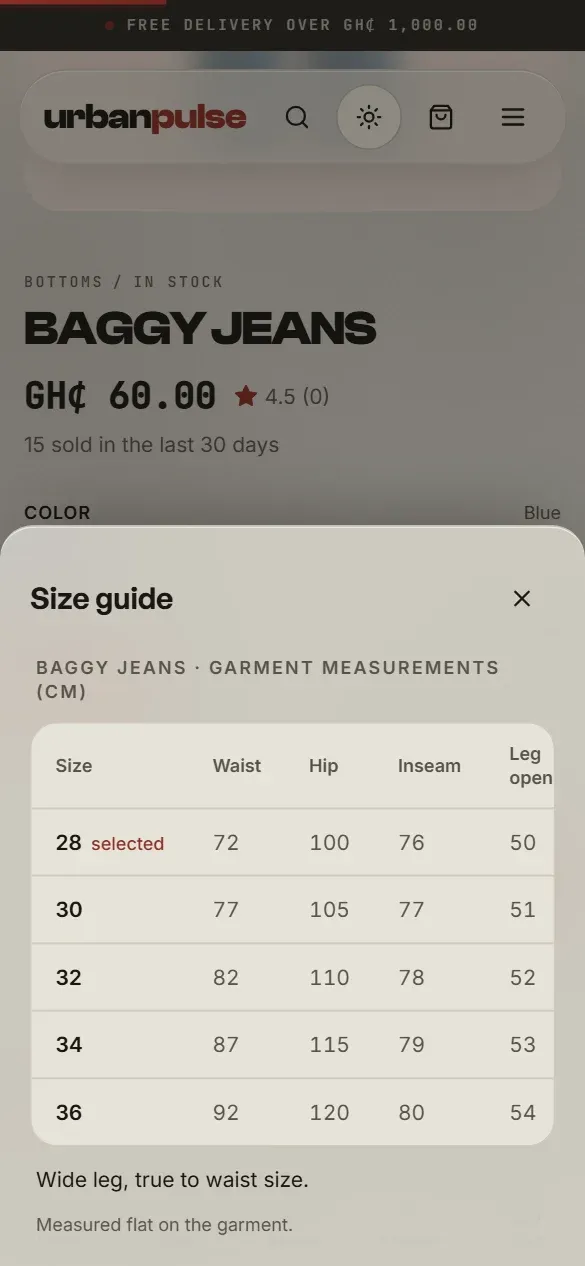
Most online stores show a product and a price. UrbanPulse’s best argument is the fabric: 320 grams per square metre, nearly double a fast-fashion tee. So the homepage opens with a short film that plays as you scroll, from Accra at dusk down to the weave itself, and a press-and-hold demo lets you feel the weight climb from 180 to 320. Featured products get an editorial page led by the photograph, and the size guide gives each garment’s own measurements rather than a generic chart.
Feeling like an app
Streetwear gets bought on phones, so the store should feel like an app in the hand. Every animation is a spring tuned by how quickly it settles, so drawers and sheets stop dead instead of wobbling after a tap, and they only bounce when you flick them. A drawer swiped shut carries on at the speed of your finger. The navigation bars are frosted glass that lifts once content passes beneath it, and they turn solid for anyone whose phone asks for less transparency or more contrast.
Paying in cedis
Checkout supports mobile money and card through Paystack, and cash on delivery. Every price is formatted in cedis in one place, so the amount you see is always the amount you pay. Payment confirmations arrive by webhook, and the server checks each one’s signature before it trusts it, so an order is only marked paid when Paystack says it was.
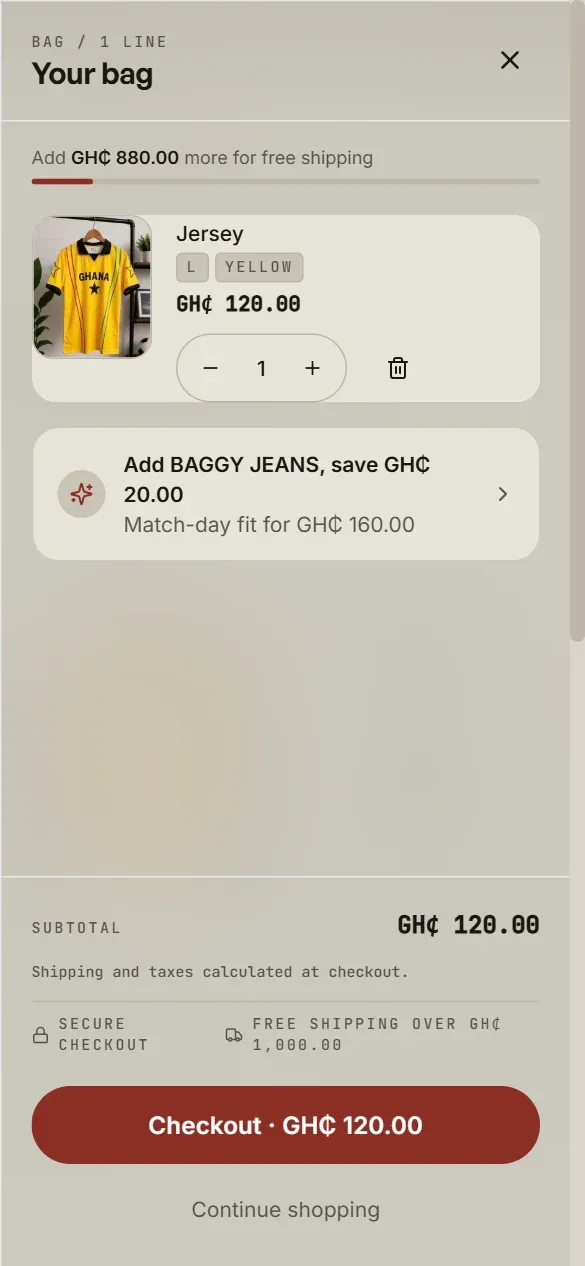
Delivery can be priced for each of Ghana’s 16 regions, and checkout asks for your region and an optional GhanaPost GPS address instead of a US state and ZIP code. Bundles, such as a jersey with jeans, are priced on the server, and the storefront mirrors that maths exactly. The saving is stored on the order, so receipts, emails, and loyalty points all agree about it.
Not losing the sale
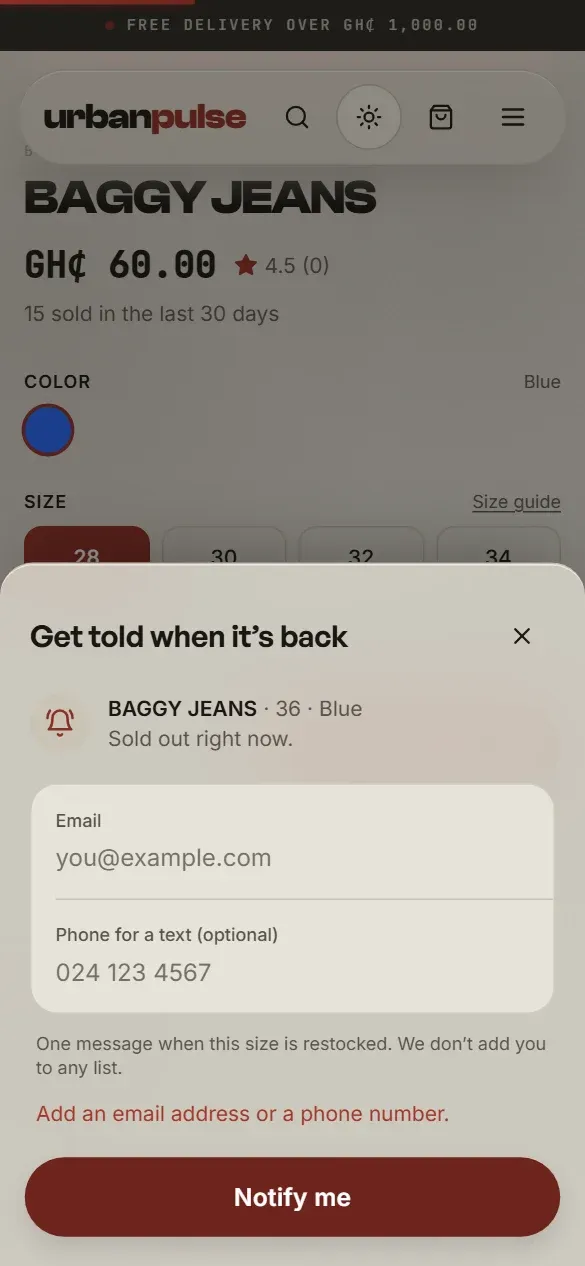
A sold-out size used to be a dead end. Now it offers to send one message, by email or text, the moment that size is restocked, and the admin can see how many people are waiting for each size. Fans can join a drop list by email or SMS. The team writes each announcement once and sends it in small batches that pick up where they left off if the tab closes, and every message carries a link to unsubscribe. Anyone can check where their order is with just the order number and the email or phone they used, no account needed. Product pages and tracking results can open a WhatsApp chat with the product or order already filled in.
Running the store
Behind the storefront is an admin for the whole shop. A Today view shows what needs doing first: orders to pack, returns awaiting approval. Beyond that there are orders, products, customers, coupons, returns, the drop list, content pages, email templates, analytics, and activity logs. Business rules such as delivery rates, bundles, and loyalty earn rates live in settings, not in code.
Customers get accounts with order history, returns, saved addresses, a wishlist, PDF receipts, and optional two-factor sign-in. Loyalty points build through four tiers, from bronze to platinum, and referrals earn store credit.
Findable and trustworthy
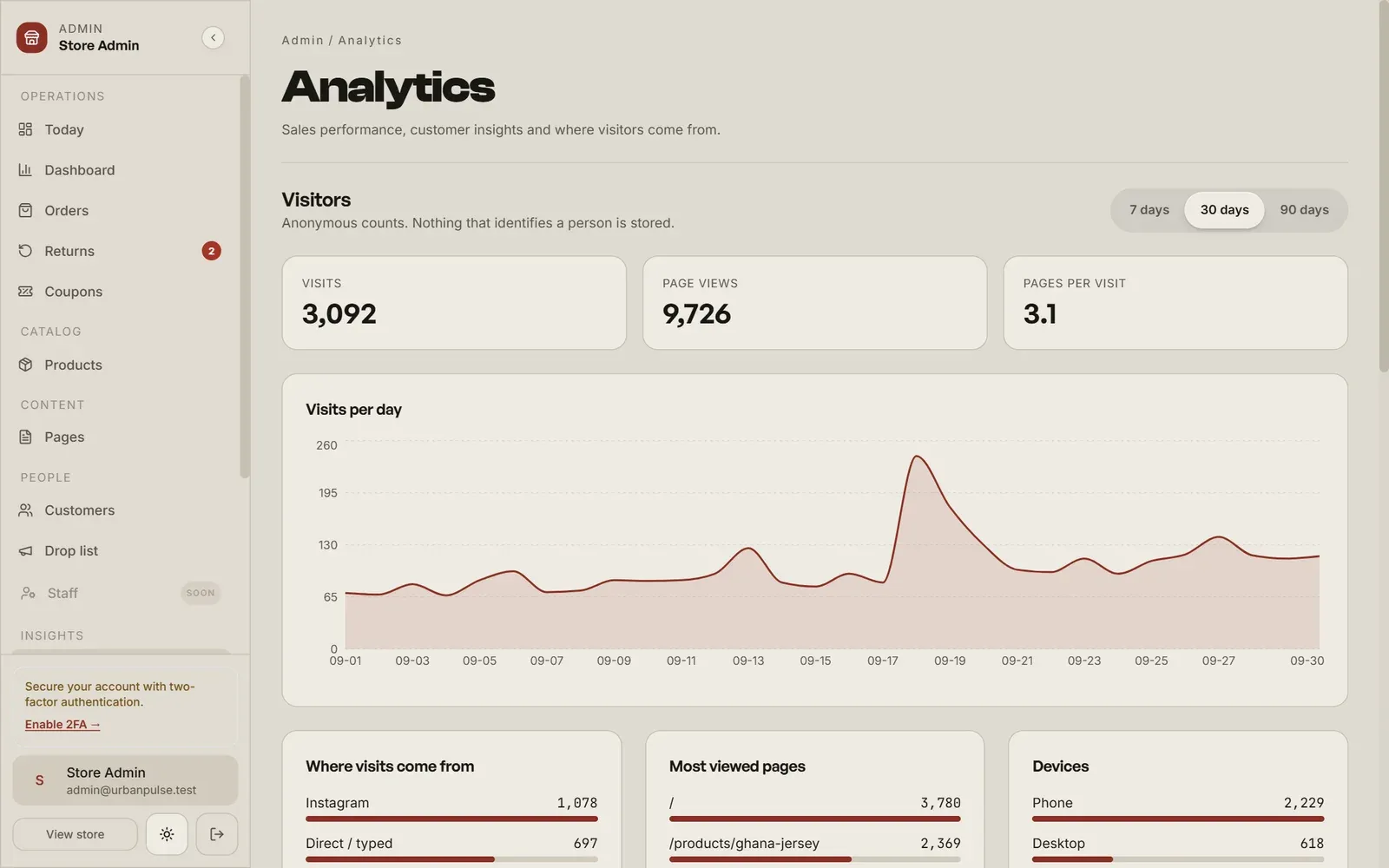
The store has structured data and a sitemap, so products can show up properly in search. It also follows Ghana’s Data Protection Act. Signed-in customers are asked about cookies once per account, not once per browser, and rejecting is as easy as accepting. Customers can export their data or delete their account. Visits are counted by the store itself, as daily totals per page, source, and device, with no IP addresses, no cookies, and nothing tied to a person.
The hard parts
- Payments that went missing. Writing tests for checkout turned up two ways a paid order could go wrong. A customer who opened the payment page twice and paid on the first one was charged, but the order stayed unpaid. And a customer whose browser got back from Paystack before Paystack’s own notification was marked paid, but never got a confirmation email or text. Payments are now matched to their order either way, and whichever confirmation arrives first does the whole job. The same tests caught two people being able to buy the last item at once, and they now run on every change against a throwaway database.
- The total shown wasn’t always the total charged. Checkout worked out tax, store credit and loyalty points with its own copy of the server’s maths, and the copy had drifted. A customer using fewer points than the minimum saw a discount the server never gave, and one order showed as free but was charged GH₵9. The maths now lives in one shared file, checkout shows that file’s result, and a check fails within a day if the storefront’s copy ever differs from the server’s.
- Spreadsheets from Excel lost their first column. The admin’s product import reads a CSV file, and Excel saves “CSV UTF-8” files with an invisible marker at the very start. The marker stayed stuck to the first heading, so a file beginning with
slughad no slug column at all. Products got new web addresses made from their names, and an import meant to update existing products created duplicates instead. The import now strips the marker, and a test imports an Excel-style file to keep it that way. - Sign-in across two domains. The storefront and the API ran on separate domains, so browsers treated the login cookie as third-party and dropped it. Nobody could stay signed in in production. I routed the API through the storefront’s own domain, which made the cookie first-party and fixed it.
- The cedi sign cost 83 KB. Every price on the site pulled in a whole extra font file just for the “₵” character. The fonts are now self-hosted with a 1.5 KB file holding only the cedi sign. Together with lighter images and scripts that load only where they’re needed, the first paint on a slow phone connection went from 5.9 to 3.0 seconds.
- A domain the store doesn’t own. When one build setting was missing, links fell back to urbanpulse.com, which belongs to someone else. On the live site, every page’s canonical link and share buttons pointed there, and receipts named another domain the store never registered. Addresses now come from one helper that falls back to wherever the site is actually served. For the same reason, emails no longer come from a made-up sender address that mail providers flag as spoofed.
- Nothing made up. I replaced every placeholder: the About story, FAQ answers rewritten to match what the store actually does, a promo box suggesting a code that didn’t exist, and loyalty perks that were never built. Receipts once printed “VAT (12.5%)” as fixed text. They now work out the rate each order was actually charged.
Stack
- Storefront: React, Vite, Tailwind CSS, TanStack Query, Zustand, Framer Motion, and an installable PWA.
- API: Node.js and Express on PostgreSQL, Paystack for payments, Cloudinary for images, email and SMS notifications, PDF receipts, TOTP two-factor sign-in, and Sentry for errors.
Screens
Signed-in screens were captured from a local copy filled with made-up demo data, so no real student or customer appears here.
- , open full size
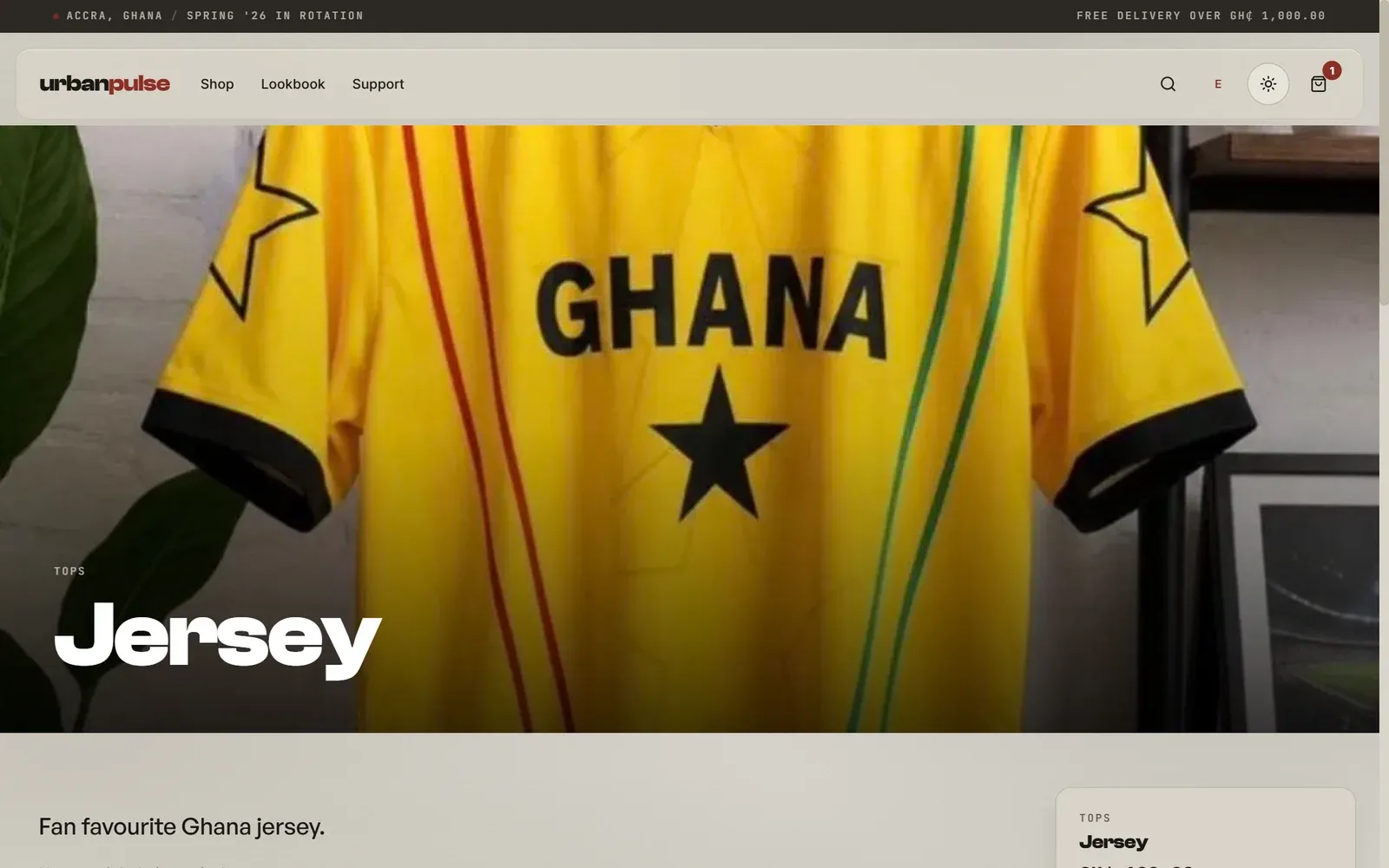
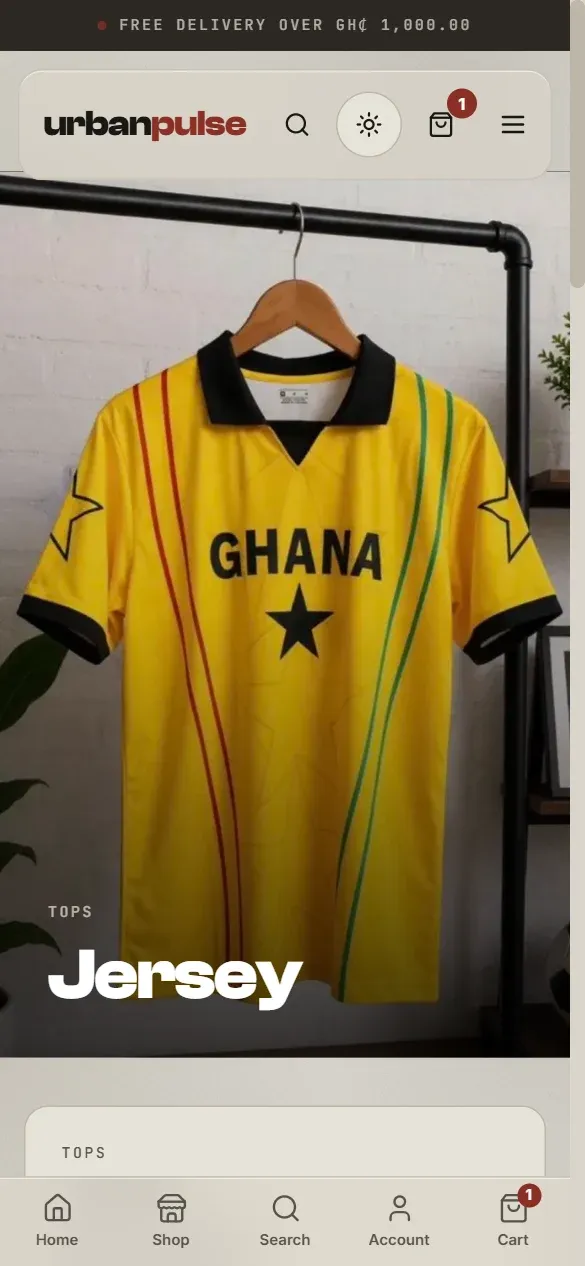
Featured products get an editorial layout, led by the photograph. - , open full size
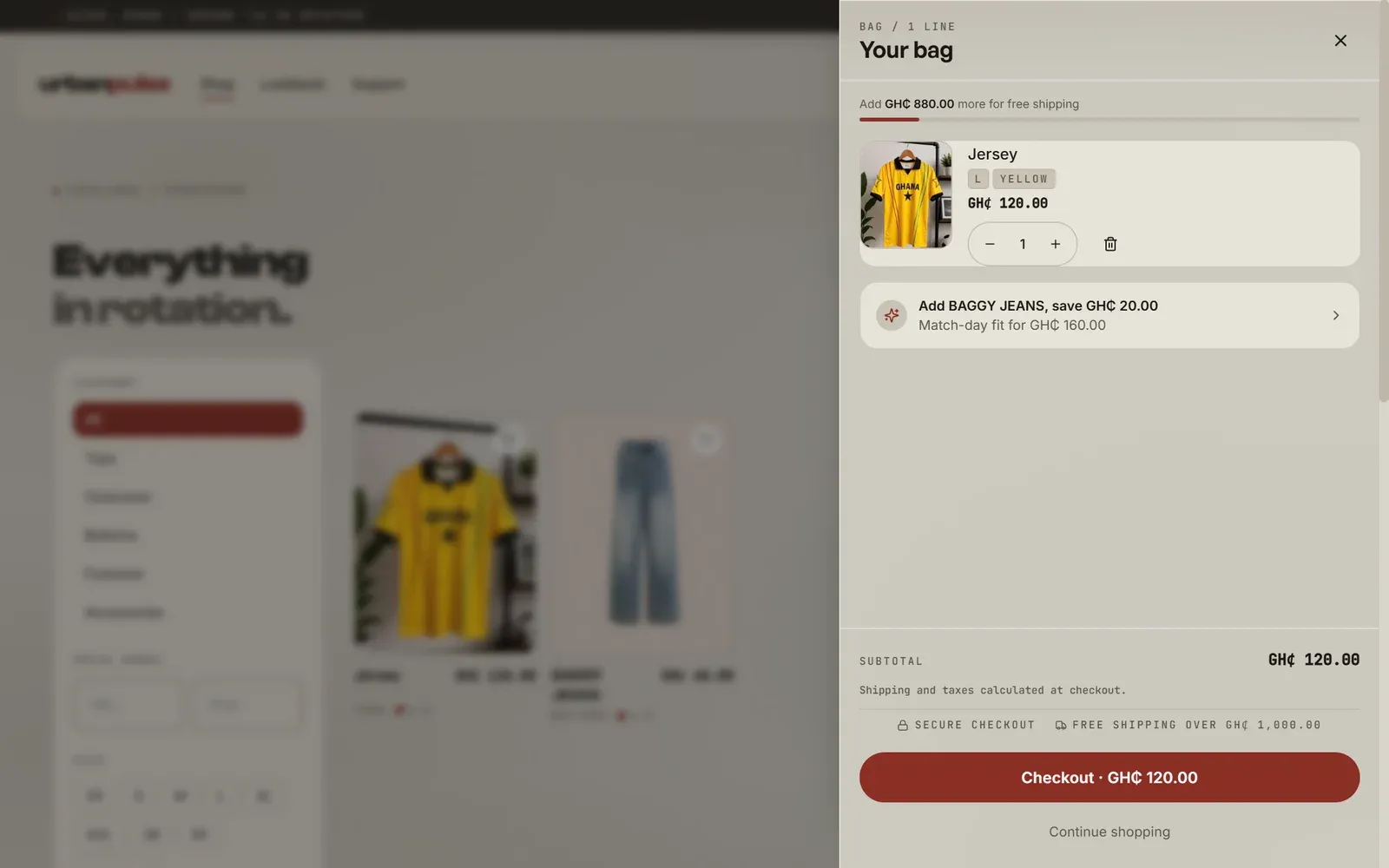
One piece short of a bundle, the bag says what's missing and what it would save. - , open full size
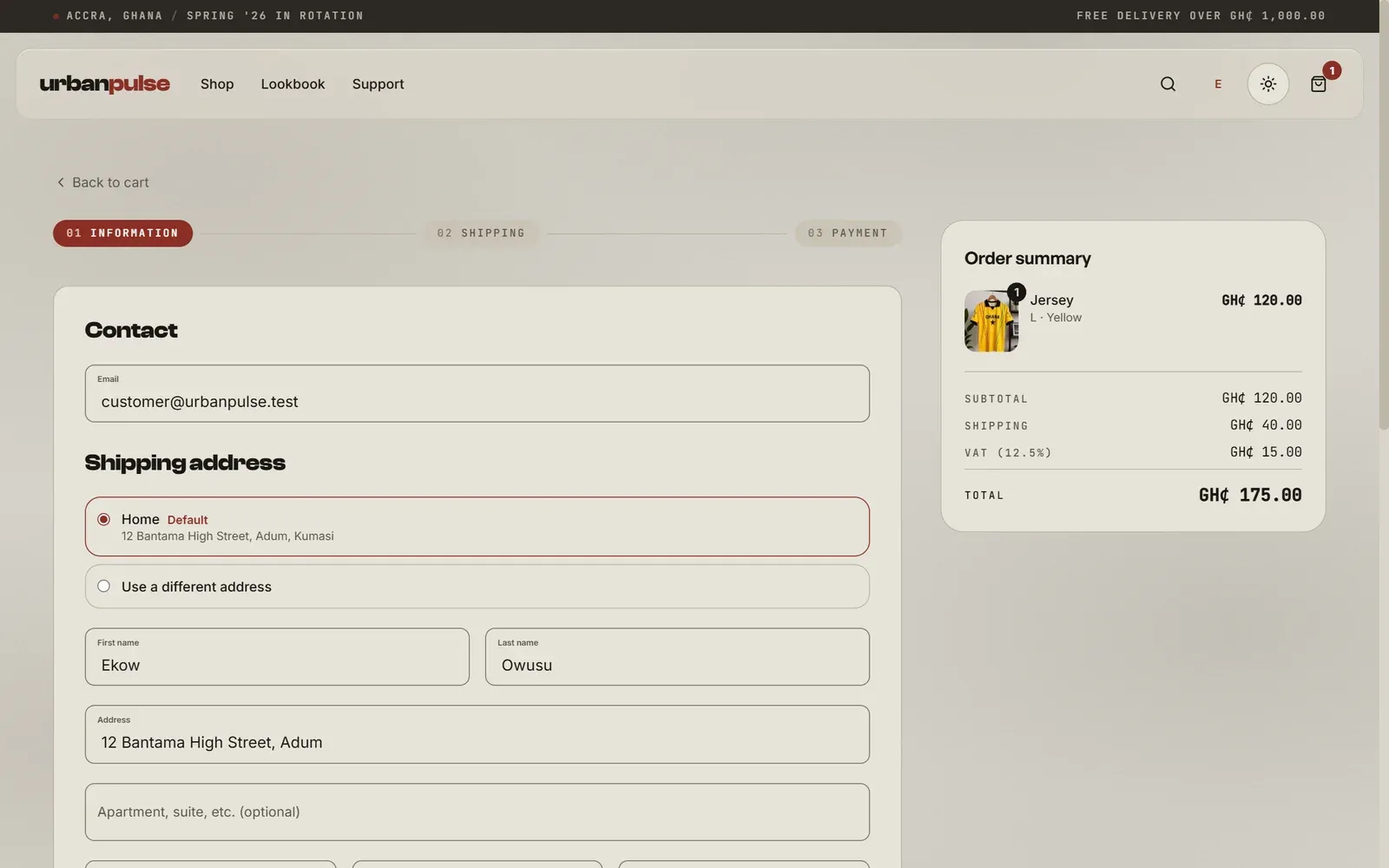
Delivery priced by region, here Ashanti's rate for a Kumasi address. - , open full size
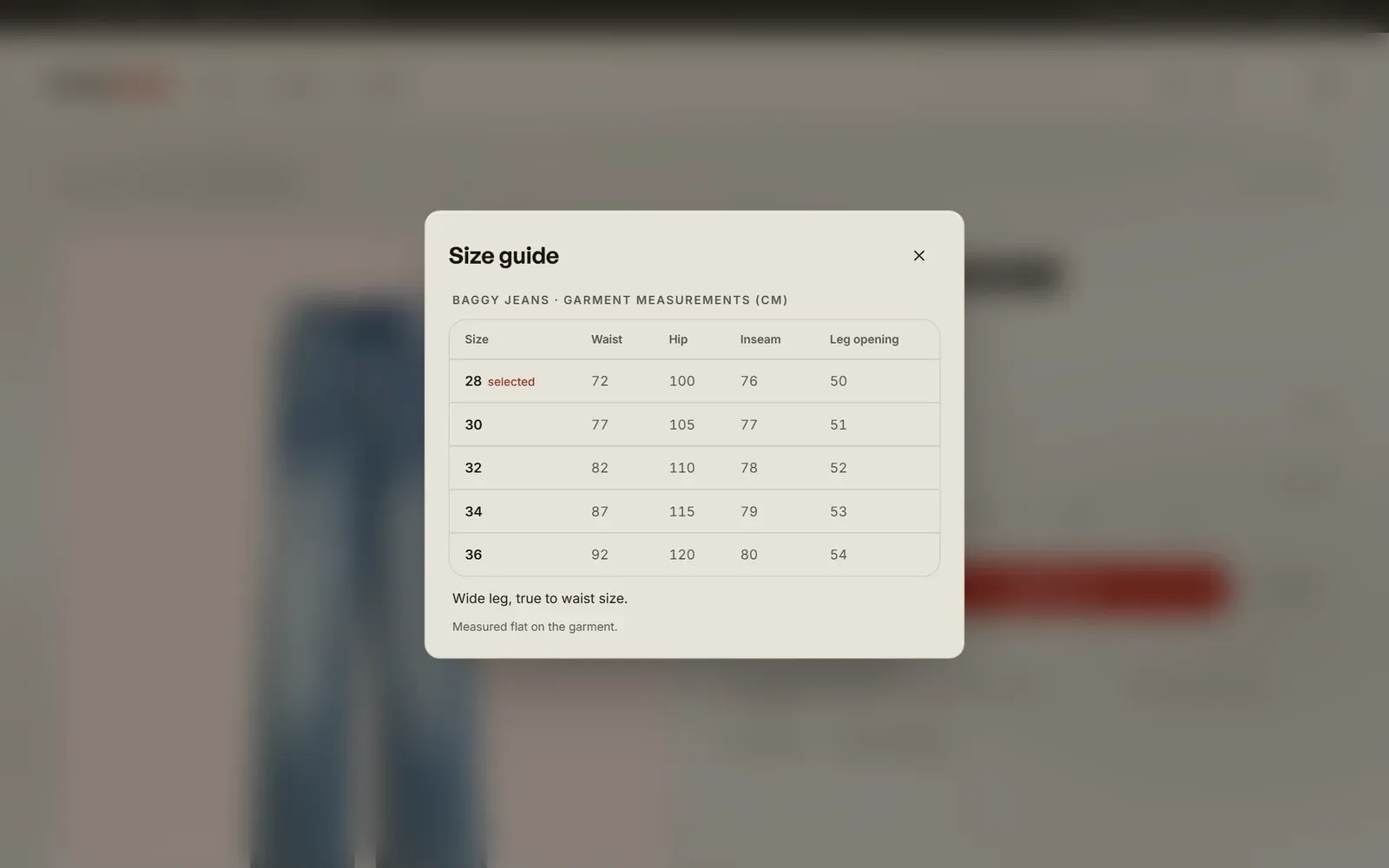
The size guide gives the garment's own measurements, not a generic chart. - , open full size
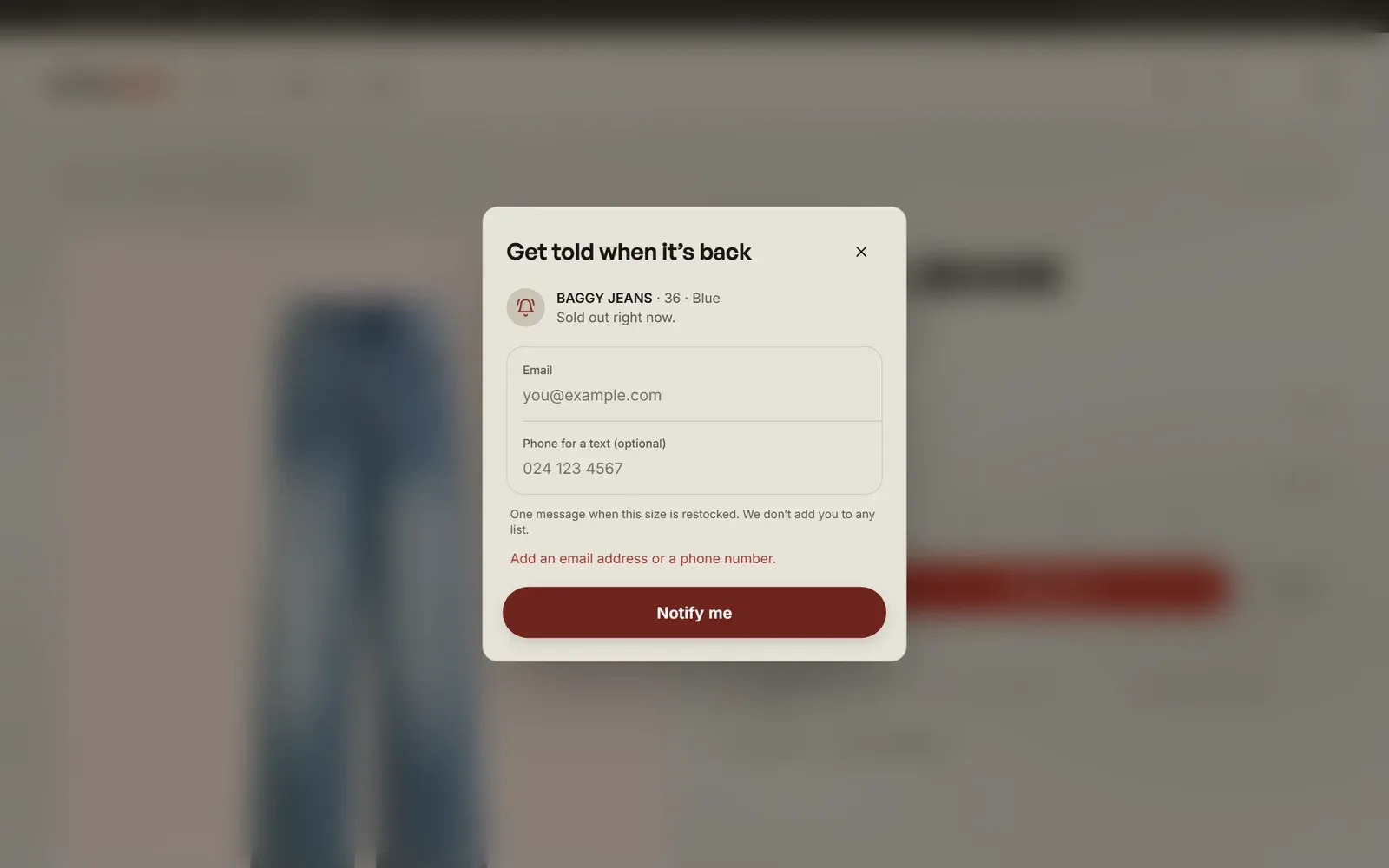
A sold-out size offers one message when it's back, and nothing else. - , open full size
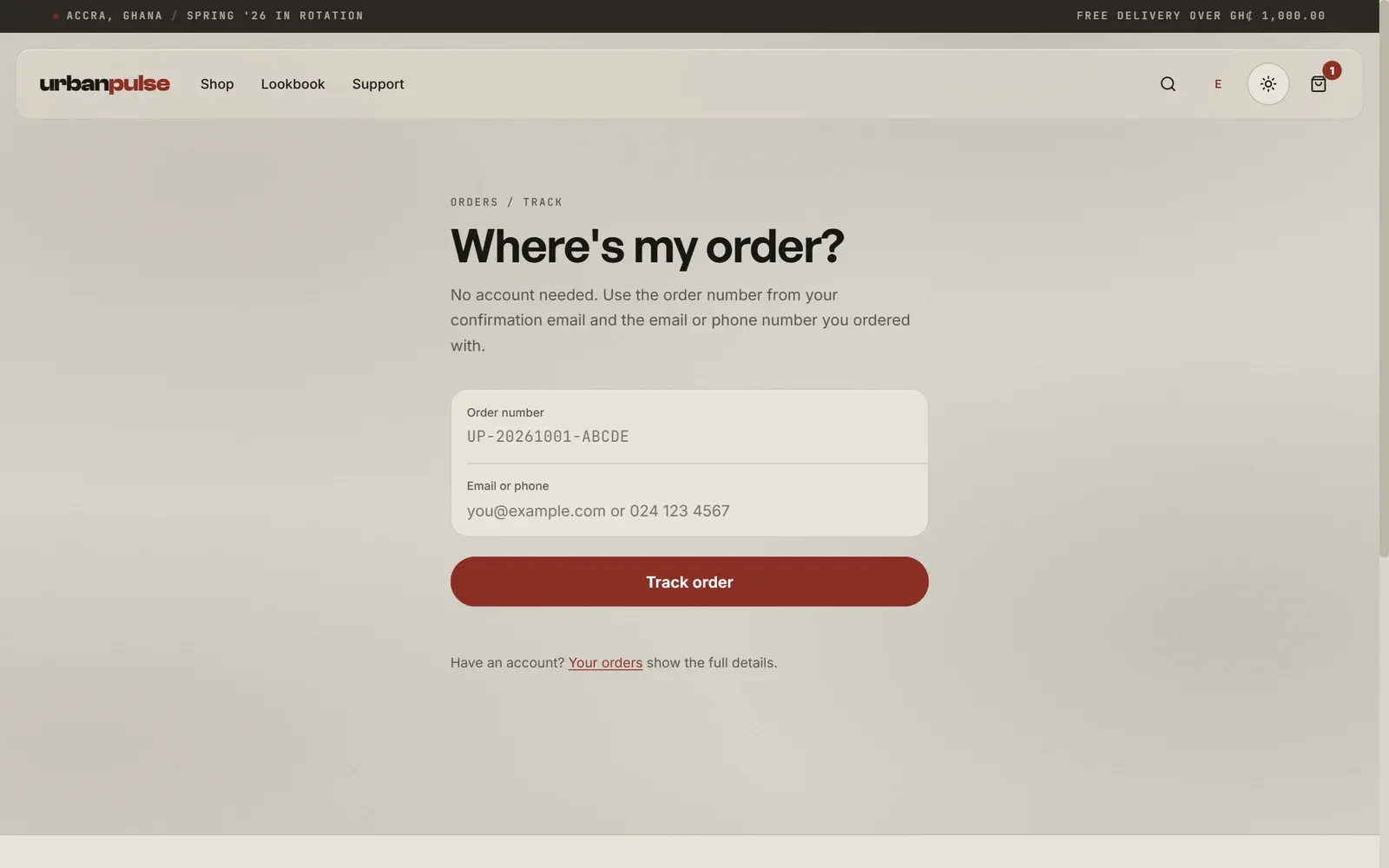
Order tracking without an account. It shows the status and dates, never the address. - , open full size
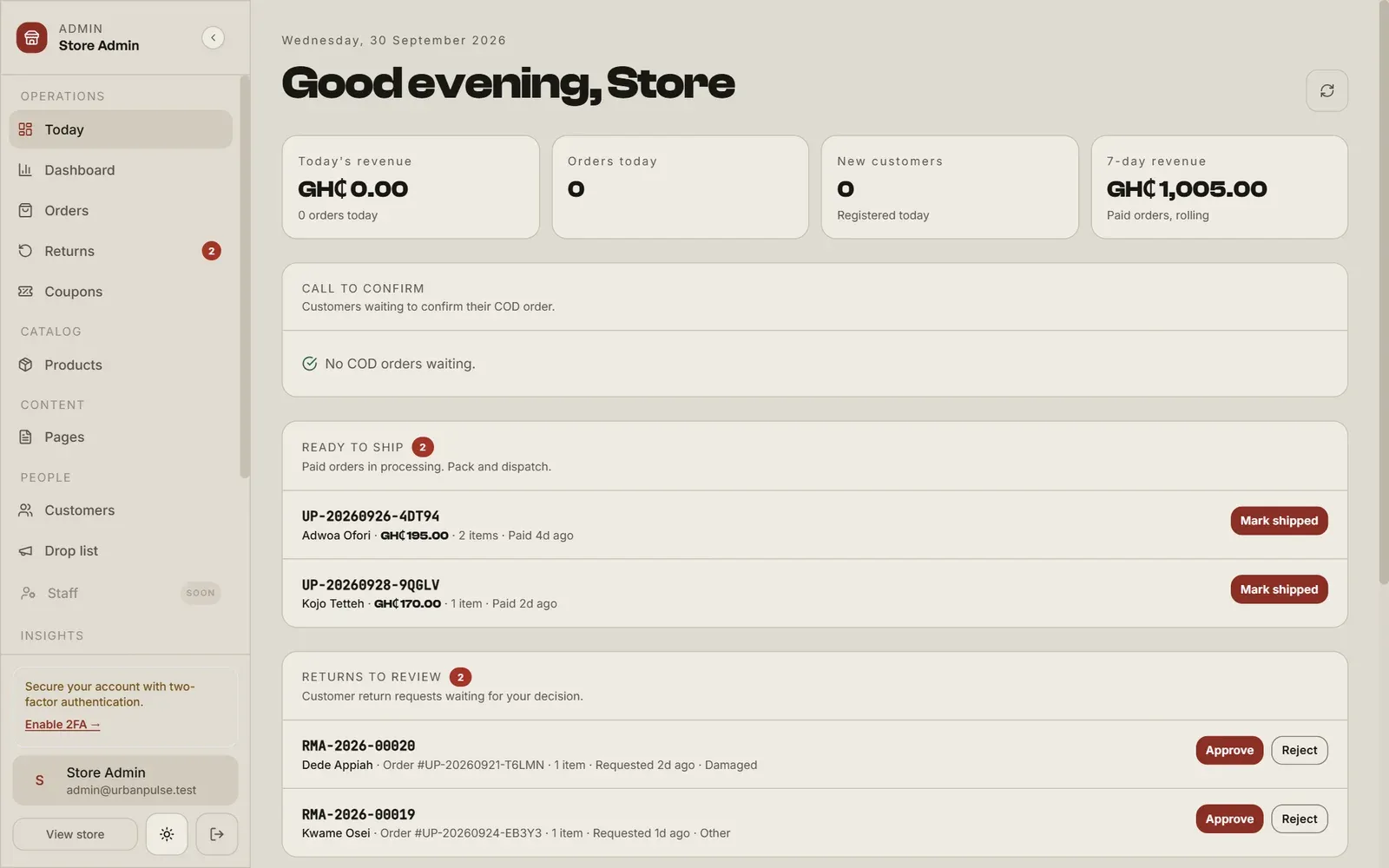
The admin Today view: what needs doing first. - , open full size
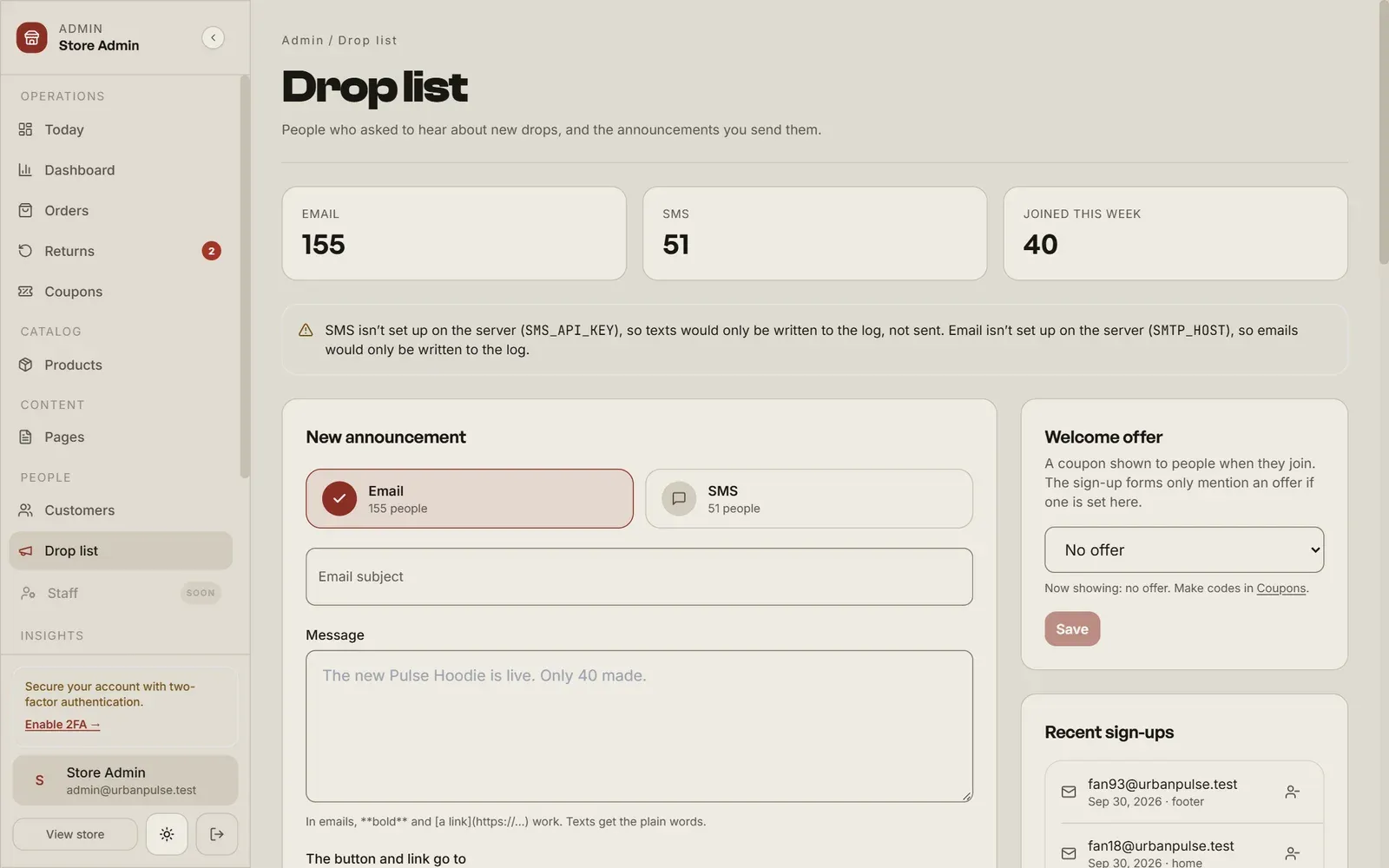
Write a drop announcement once, and send it by email, SMS, or both. - , open full size
Visit counts the store keeps itself, with no IP addresses and no tracking cookies. - , open full size
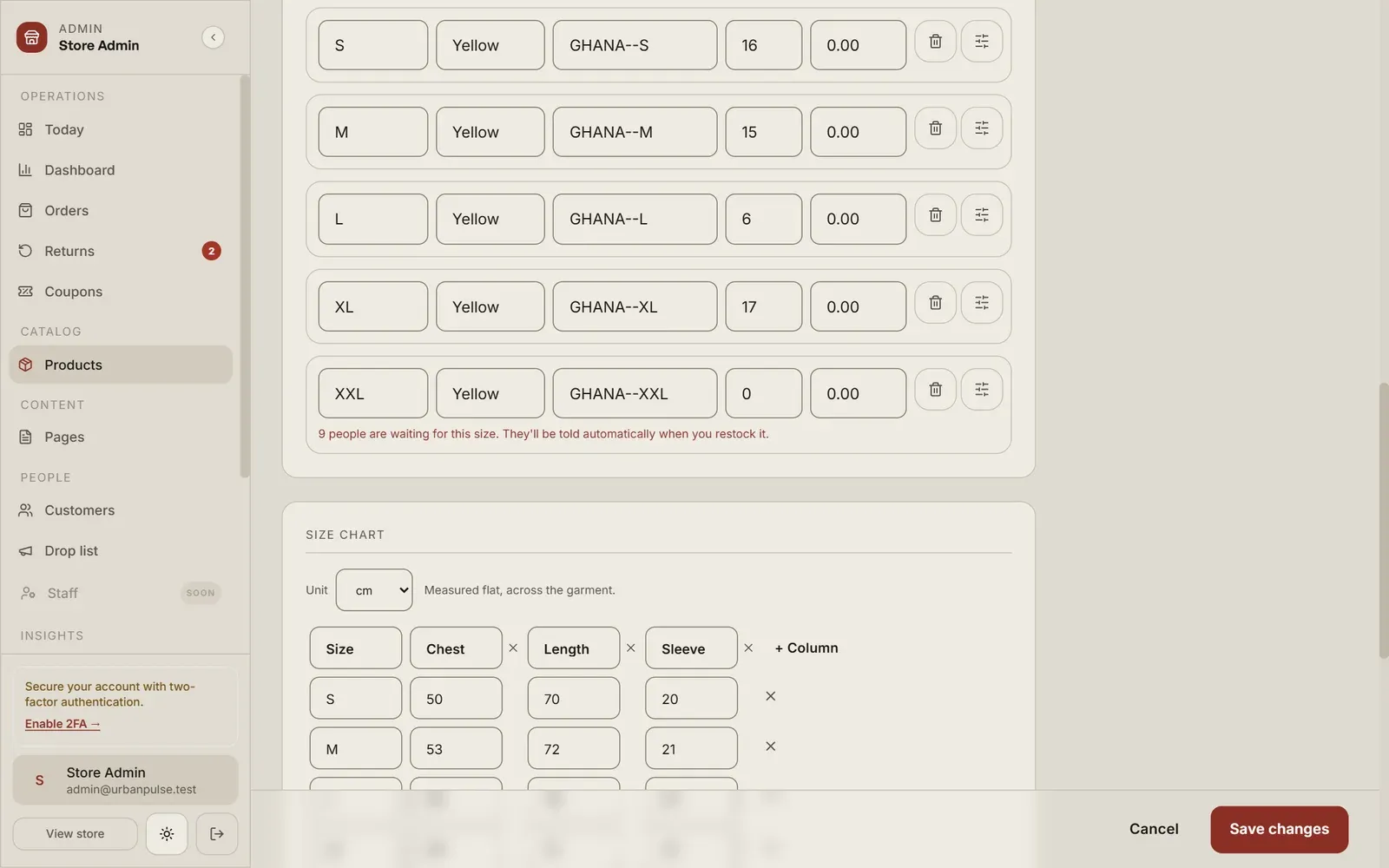
The product form shows how many people are waiting for each size. - , open full size
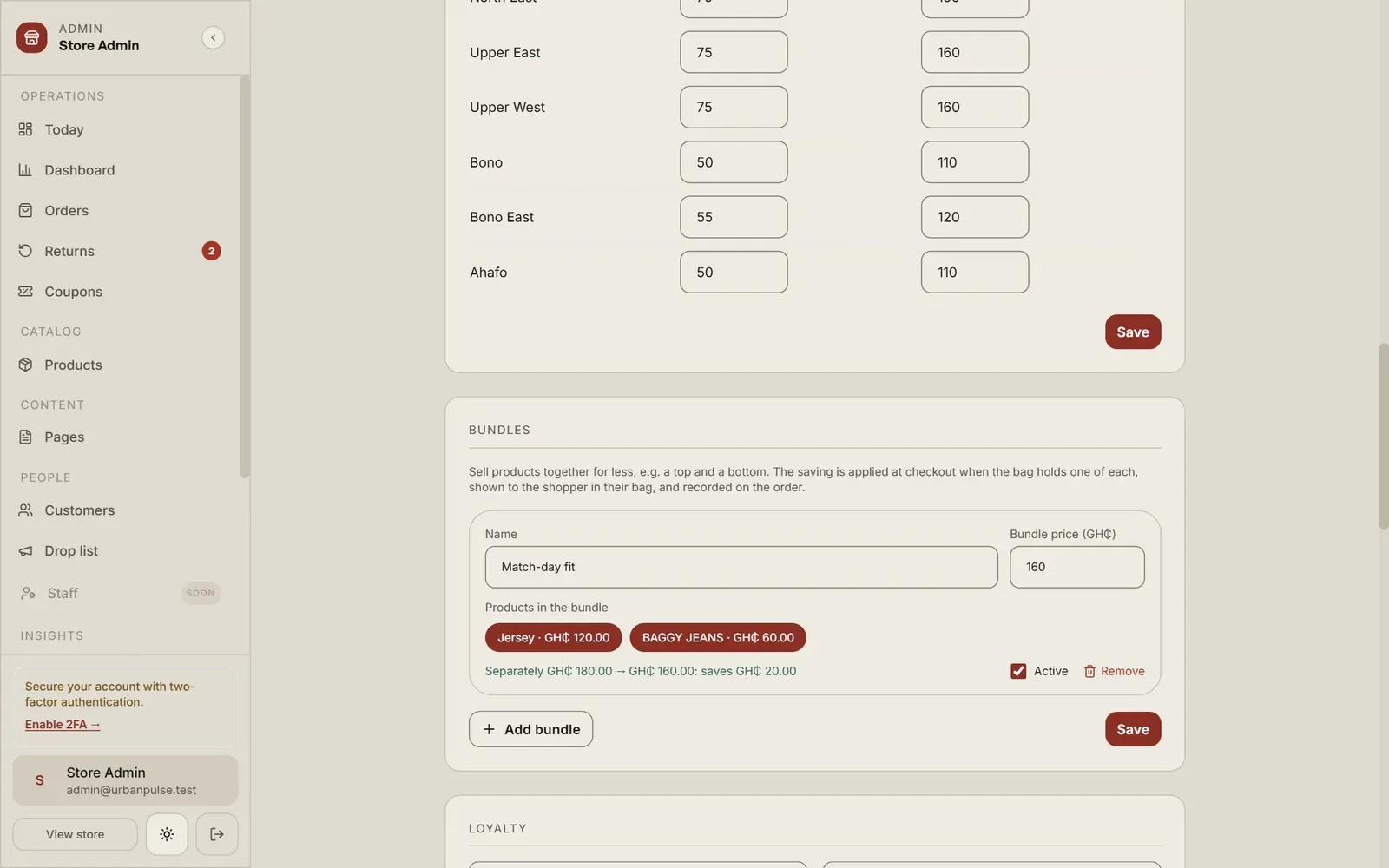
Region rates and bundles live in settings, not in code.
Next case study
AttendX
A class register that fills itself, and can't be signed from the hostel.
Have something similar?
Let's talk about what you're building.